
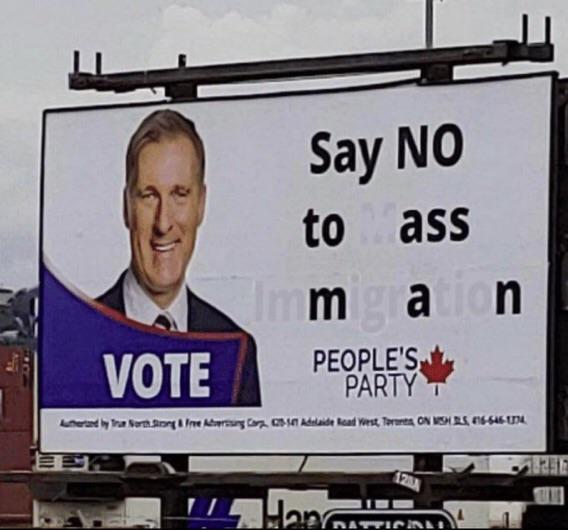
[ Part of The Canadian Far Right in the Time of COVID ]
It’s an election in the wake of Trump’s 2020 debacle, so of course the 44th Canadian Election is going to be subject to paranoid speculation and rightwing fantasies. It helps that the country’s major broadcaster is fuelling the fire.
Burying the Lead
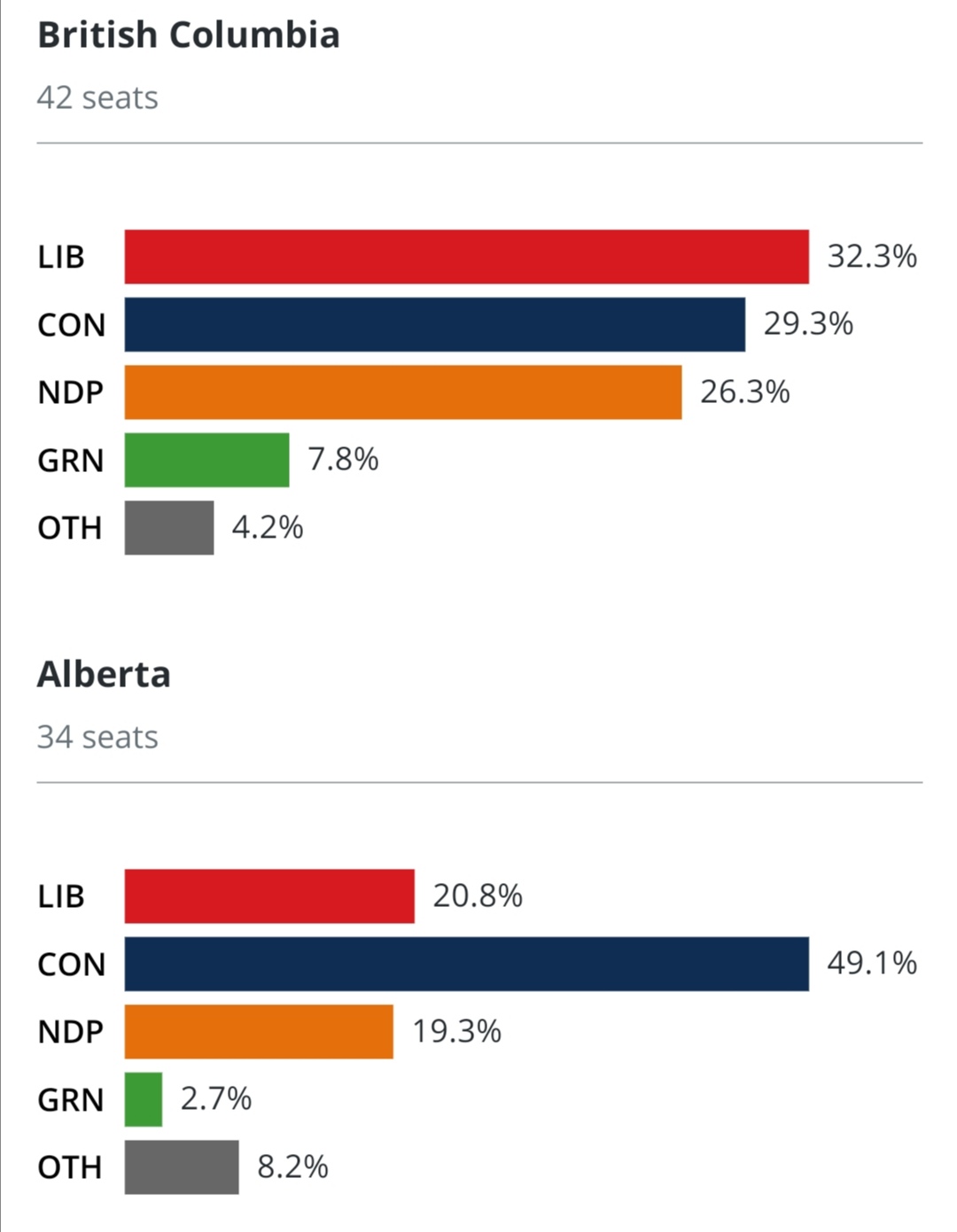
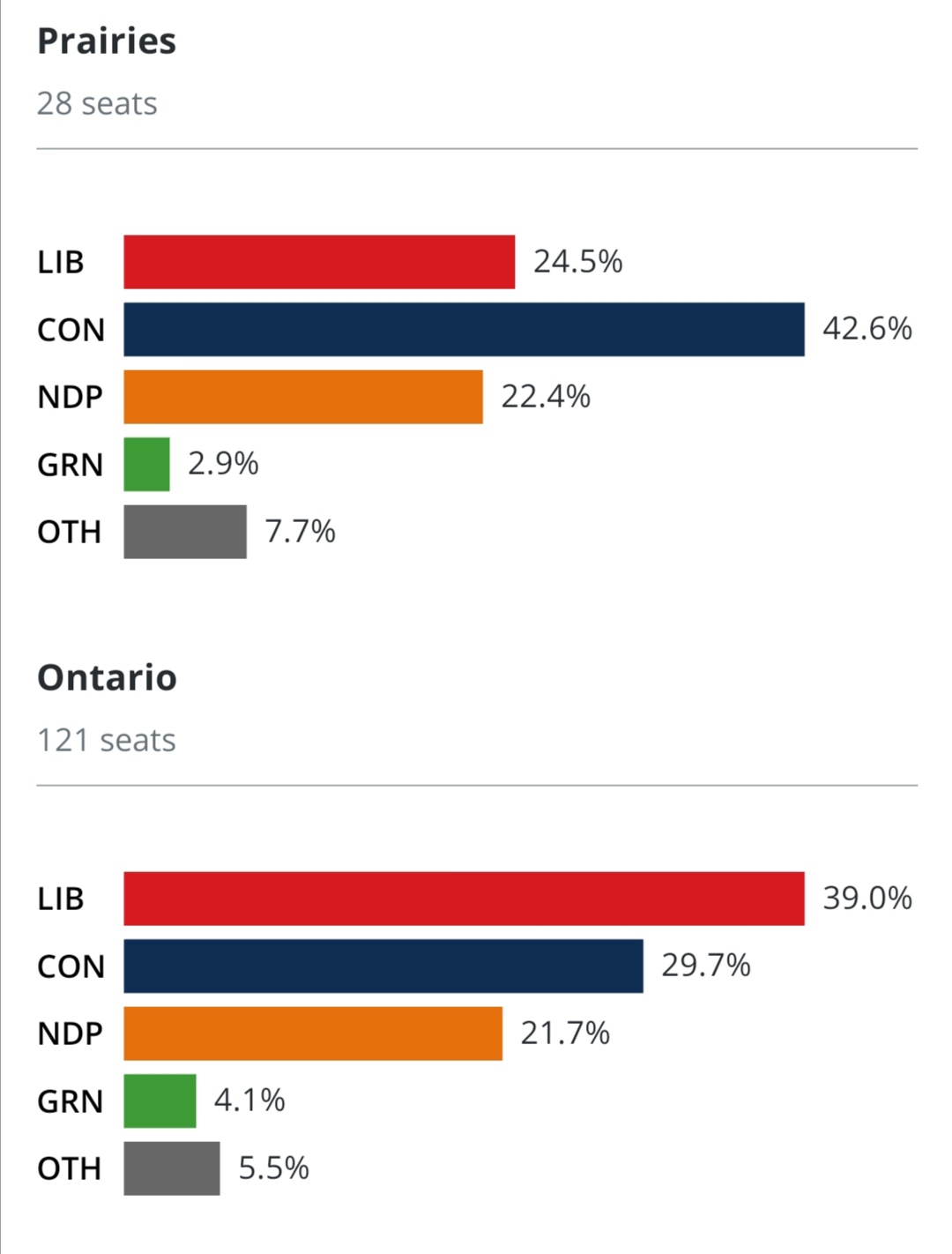
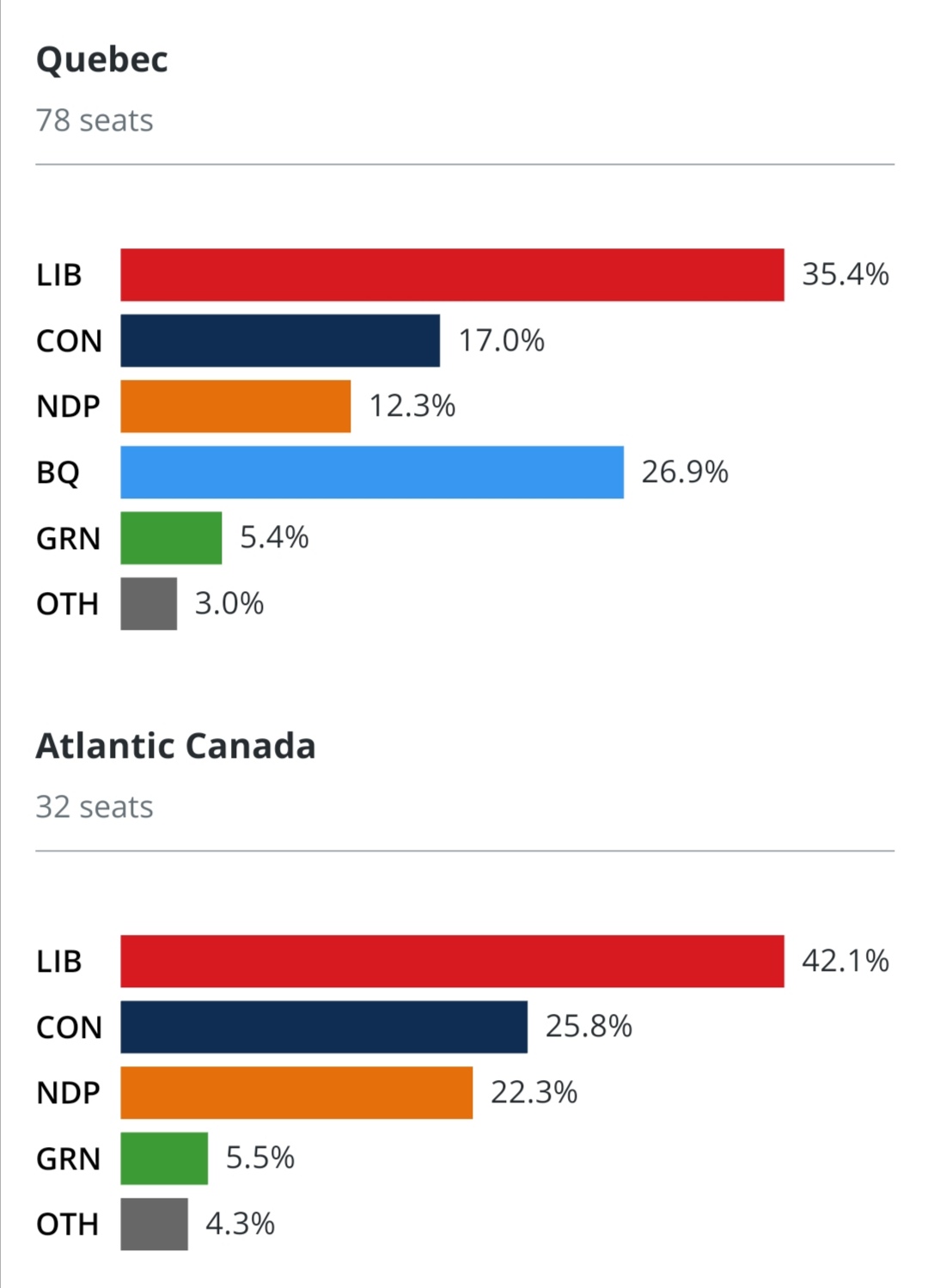
Note that in Alberta “OTHER” sits at 8.2%, in the Prairies at 7.7%, and in Ontario 5.5%. In each of these regions the “Other” parties hold a lead over the Green Party; in the West, the “Other” parties have three times more support than the Green Party.
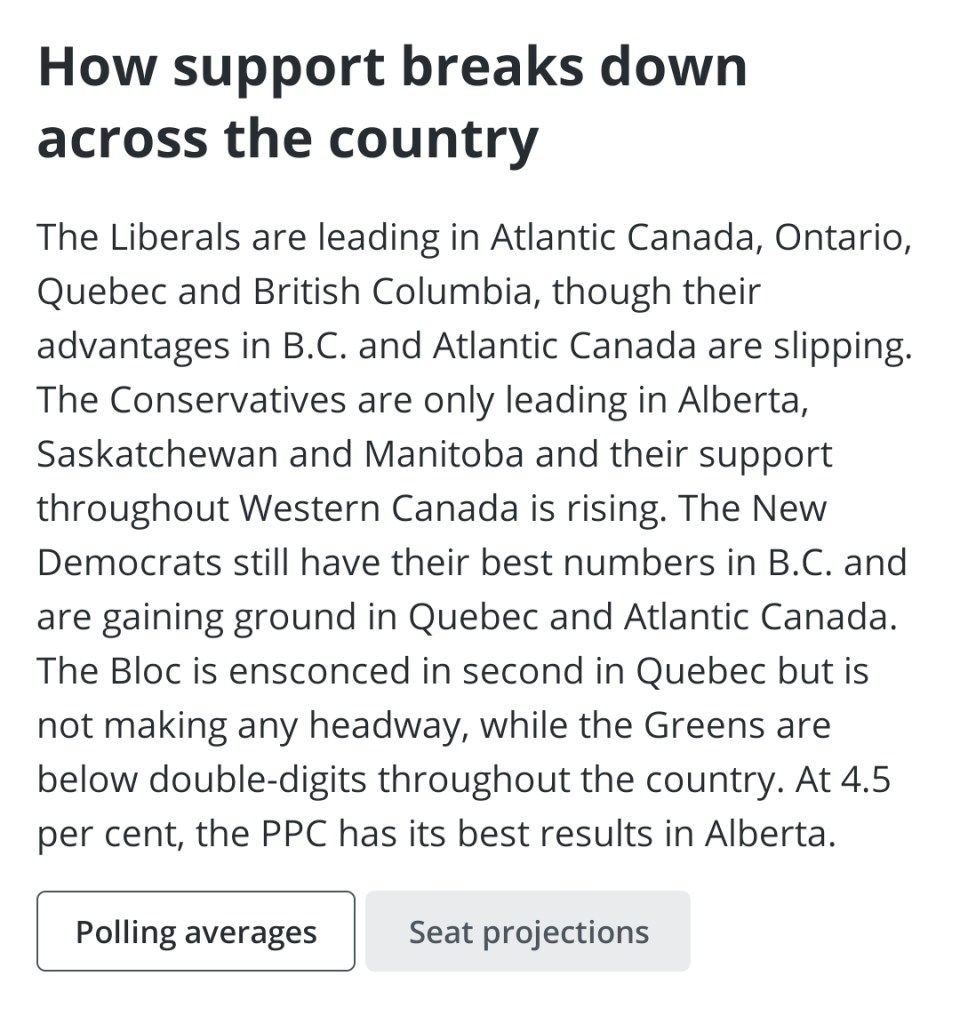
If the PPC is 4.5% of Alberta’s 8.2% “Other” votes, then the Greens are even less significant than the remaining 3.7% of “Other” parties.
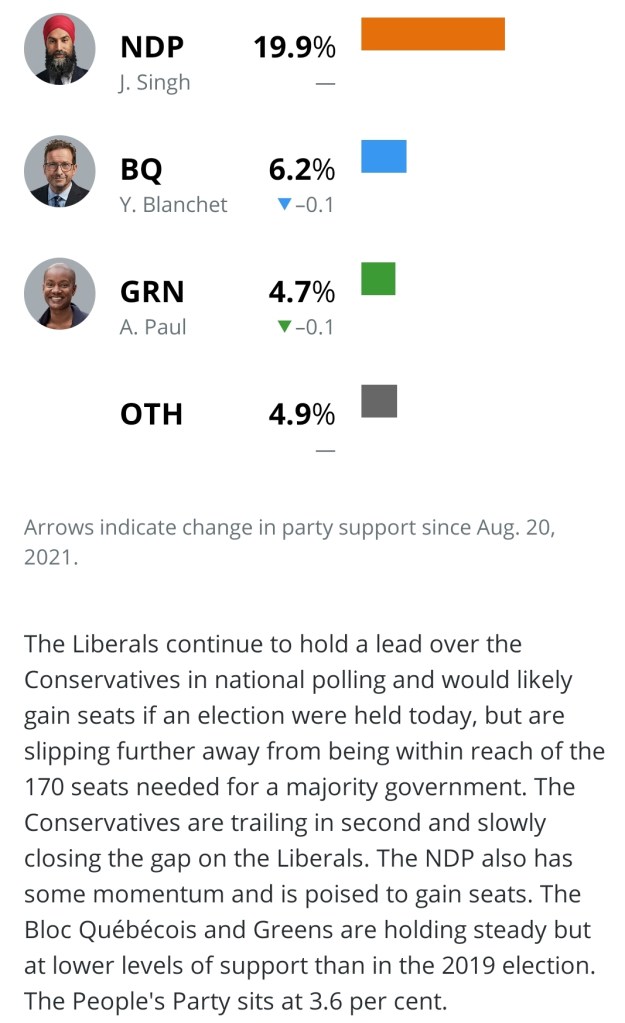
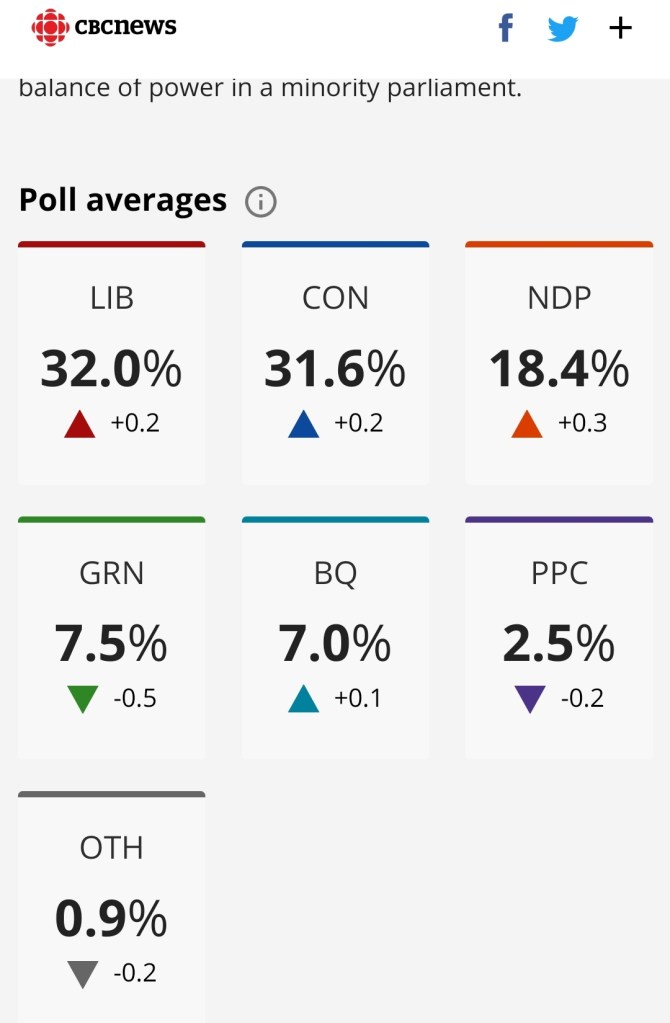
CBC has data indicating that “The People’s Party sits at 3.6 per cent” nationally and 4.5% in Alberta. This means that only 1.3% of the national poll is held by “Other” parties. The PPC is only 1.1% behind the Green Party, which is 1.4% behind the Bloc Quebecois. They have comparable levels of support nationwide and yet the CBC Poll Tracker excludes them.
Counting the PPC vote
If we look at a poll graphic that includes the PPC we can see some other interesting details:
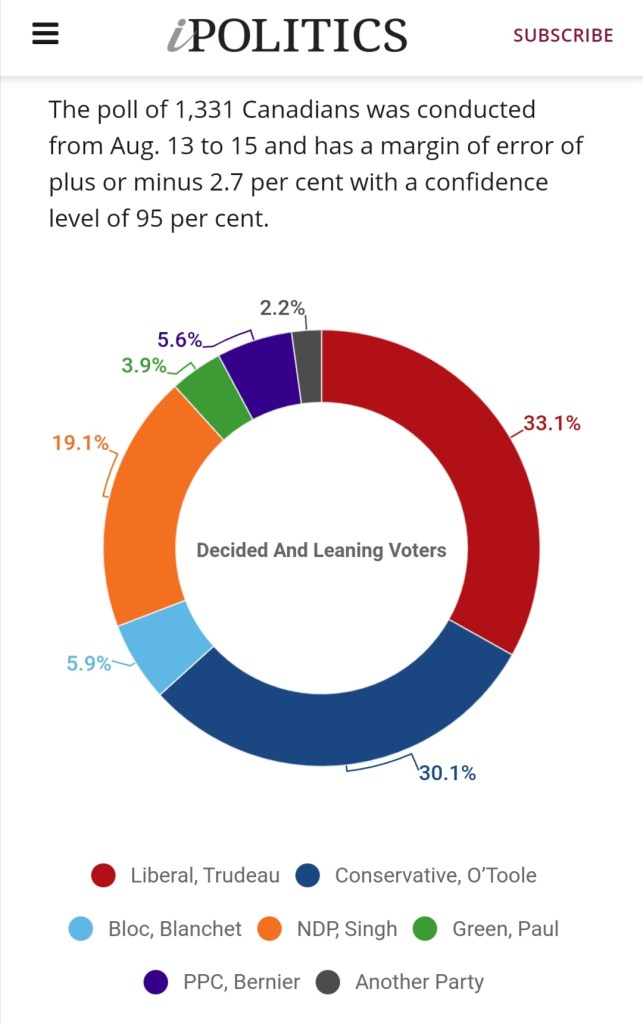
Mainstreet included the People’s Party in its survey of Decided and Leaning voters. It’s margin of error gives the PPC a swing between 2.9% and 8.3%. In this poll the PPC occupies a significantly larger position than the GPC.
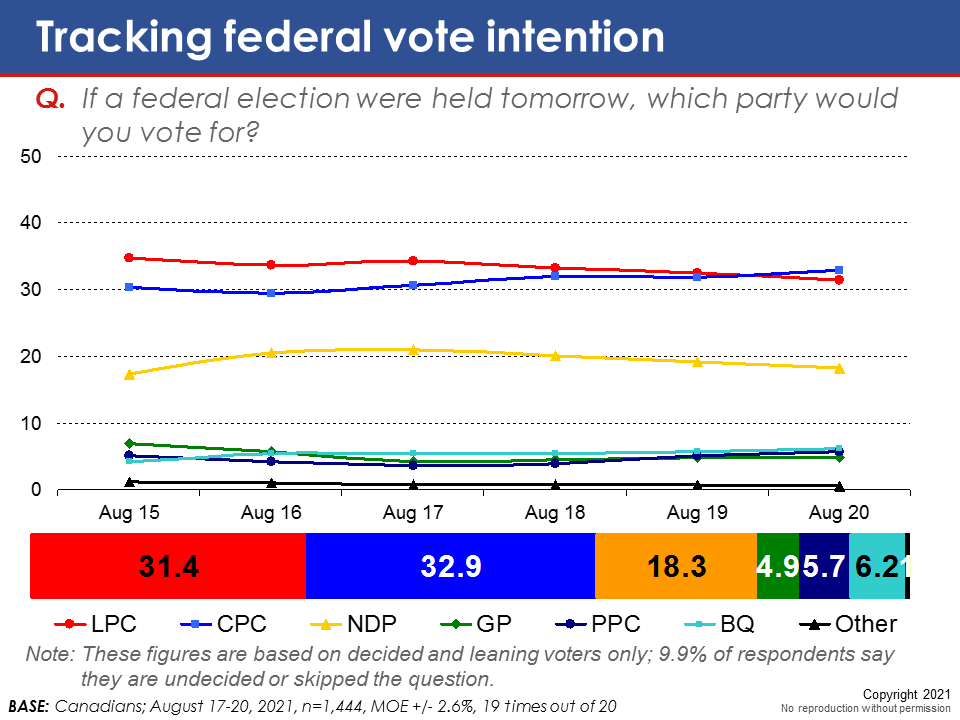
EKOS polling shows that the GPC is losing momentum and the PPC is gaining it, nearly matching the support of the long-established Bloc Quebecois.
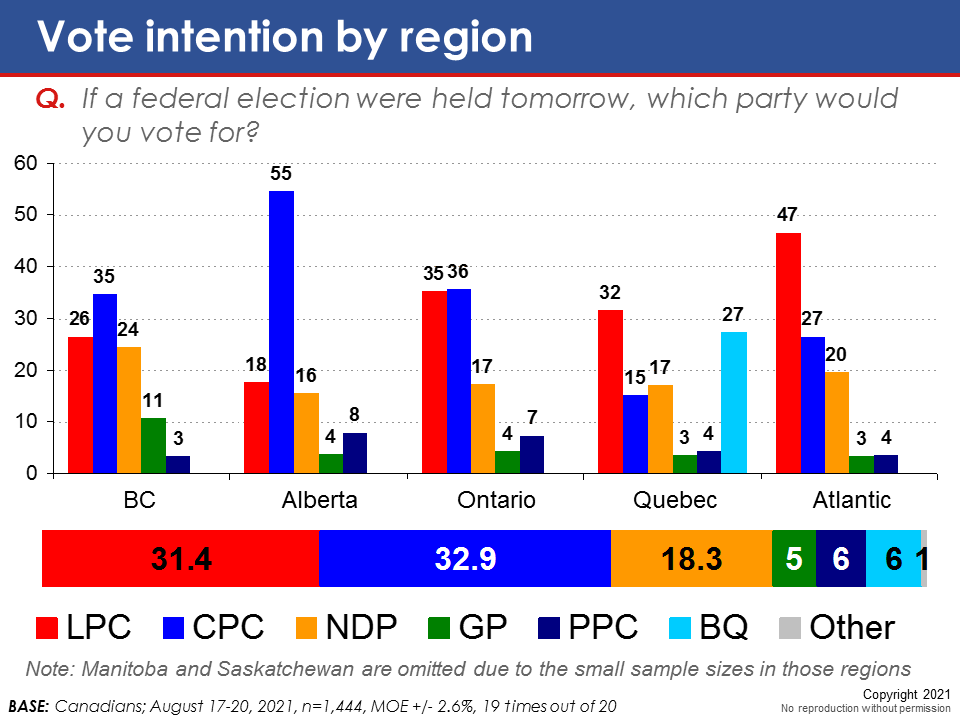
And the only region where the PPC does not lead the Greens is British Columbia.
By hiding the party from its Poll Tracker the CBC is concealing the fact that the People’s Party is nationally competitive with the Green Party.
The Party that cried Repression
But why would the CBC exclude the PPC from coverage in this election, when it had covered the party and ranked it in the 2019 Poll Tracker? That had been in spite of the party being unable to break 3% in the 2019 polls.
The easiest explanation is that the PPC had been included in the Leaders’ Debate in that year. Bernier had qualified to participate because he still held the seat he won as a Conservative in 2015.
The criteria for a leader’s inclusion are very clear: their party must have sitting MPs or 4% of the vote in the previous election or 4% of the average poll within 6 days of the election being called. Despite expectations that they would qualify for the debate, the PPC has not met their target.
But is that enough reason to exclude them from the Poll Tracker altogether? Their support is much greater now than it was then, this data is known to the CBC, and two other parties are named by the tracker despite similar support levels.
Naturally, PPC supporters believe that this is part of a political conspiracy to keep the upstart far-right party out of the limelight. This exclusion does not weaken them, but strengthens their resolve and their image as an outsider, anti-establishment party.
And considering that they are the only anti-vaxx, anti-Islam, anti-immigration, COVID- and Climate-denialist party, this means we should expect a whole lot more noise from the party of panicked White settlers.

 Liminal States