
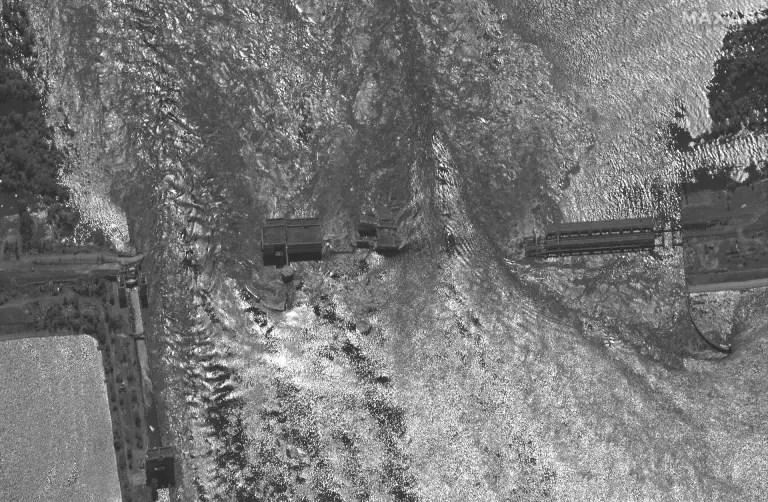
On June 6th 2023 the Kakhkovka dam and hydroelectric plant in Kherson was destroyed by explosions. Both sides of the Russo-Ukrainian War are blaming one another and English language media agrees it was most likely blown up from within by Russia. We will look at the devil’s advocate position to avoid the problems of the failure of imagination.
Who Benefits?
It doesn’t make sense for Russia to order its destruction because it mostly caused damage on their side of the river, and they intend to keep Kherson (why else would they annex the region?). The ruin of the dam depleted water supplies to Crimea, which Russia also intends to keep. It took them 8 years to restore water supply to Crimea after Ukrainian authorities had dammed up the main canal. Now Crimea has lost its Dnipro water supply again and will have to resume costly alternative means of delivery.
If Russia ordered the sabotage of the dam then the benefit must have somehow been worth more than the cost of all this destruction, as well as the ongoing costs of managing the emergency situation and resupplying Crimea with fresh water. This will stress Russian resources long after the flooding subsides.
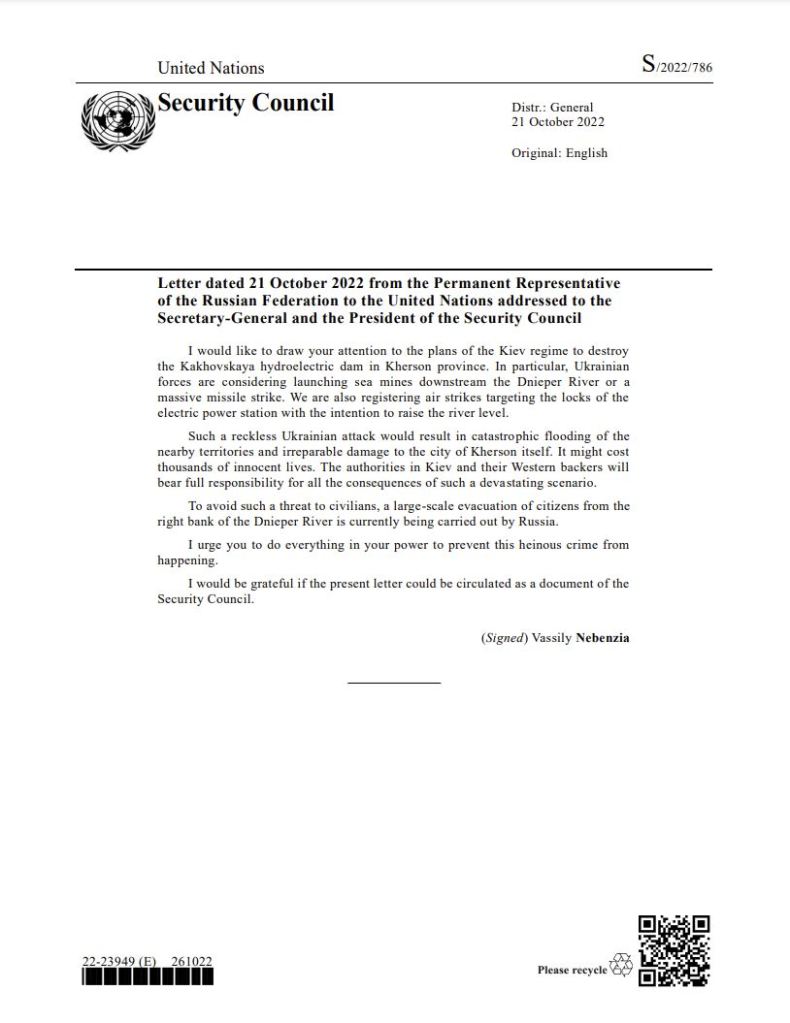
The only benefit I can see to Russia is that the flooding on the Dnipro makes it harder for Ukraine to stage an amphibious assault across the river, but this effect is going to be temporary while the reservoir drains. For this to have been an effective defense strategy the Russian forces would have had to time it for just before the Ukrainian counteroffensive. As it so happened, this is when the dam actually did fail. But how would Russia have known exactly when the counteroffensive would begin?
It’s more beneficial to Ukraine to blow the dam because then they cause damage to the Russians, strain their resources, and cut off Crimean water. They could have easily timed it for the start of their own counteroffensive.
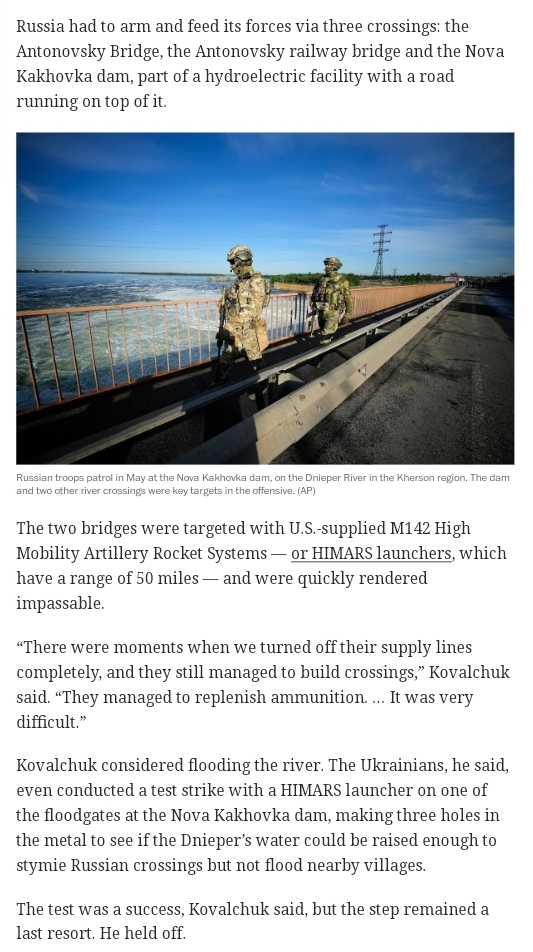
They also practiced punching holes in it with HIMARS in December, and told Washington Post how they did it.
Who had the Means?
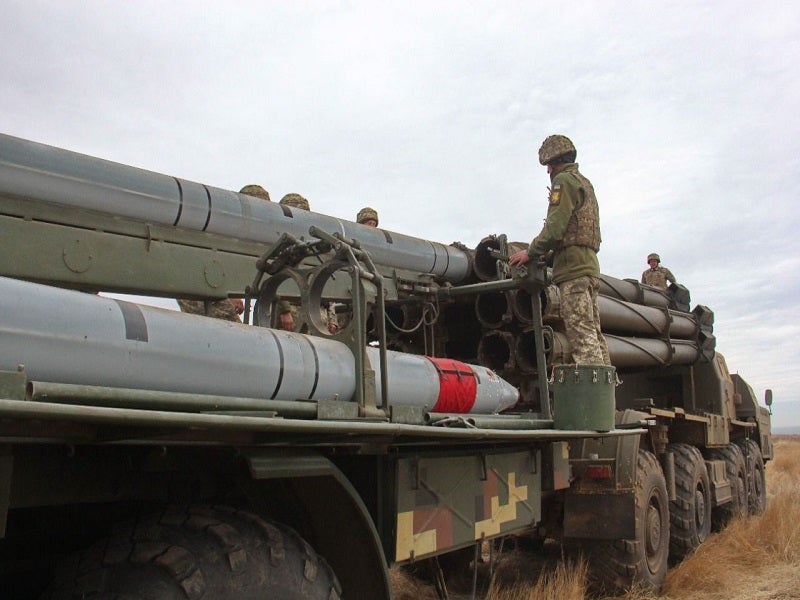
NBC cited a Sky News interview with retired British Col. Hamish de Bretton-Gordon saying that it was “implausible” Ukrainian forces blew the dam using HIMARS, as it would have required 20 to 30 of these rockets. However, Russian sources claimed that an “Olkha” (Ukrainian: “Vilkha”) rocket artillery bombardment caused the collapse of the dam’s valves. Vilkha “can reach targets 68-miles away with a much larger warhead than the M31s fired by HIMARS.” Unlike the U.S. made and controlled HIMARS system Vilkha is domestically produced and uses 250kg warheads, compared to HIMARS’ 91kg. It also carries twelve missiles, compared to HIMARS’ six. Director Syrota of Ukrhydroenergo told The Guardian that the dam had been built to withstand a nuclear blast and that “at least three aircraft bombs, each of 500kg, would have had to be dropped on the same spot” to destroy it. This is equivalent to six precision strikes by Vilkha made from 70km away, one half of the vehicle’s capacity.
A rocket bombardment is consistent with reports and evidence of multiple explosions over the course of an hour. Local residents reported hearing explosions from the dam between 02:00 and 02:35. The NORSAR seismic array detected an event from the direction of the dam at 02:35, followed by a much stronger one at 02:54 coinciding with the collapse of the dam. Another resident had reported seeing an “orange flare” at 02:45.
The gates upstream are also under Ukrainian control, so the armed forces could have controlled the reservoir’s water levels and the amount of pressure on the dam structure.
Why Blow the Dam?
I don’t think we can argue against this being a possible Ukrainian sabotage by saying that they wouldn’t do this to their own people. The Ukrainian Armed Forces sent thousands of men to die for nothing in Bakhmut and are doing the same in the current tank charges in Zaporizhzhia with no air support.
In light of subsequent events it doesn’t make sense for Russia to blow the dam for a temporary defensive advantage across the river, even if they had found out the exact date of the planned Ukrainian counteroffensive. As we are seeing, Russian defensive lines were already very well prepared and the counteroffensive did nothing to penetrate them. The flooding also destroyed fortified Russian positions in Kherson, but not Ukrainian ones. Western analysts agree that the objective of the counteroffensive is to cut the land bridge to Crimea, not to retake the opposite end of Russian held territory. The destruction of the dam has been a very expensive loss for Russia, which had clearly anticipated the counteroffensive to be further up the Dnipro anyway.
It’s not easy to think of reasons for the Ukrainian forces to destroy the Kakhovna dam. It is a colossal ecological and humanitarian disaster and ruins hundreds of millions of dollars worth of infrastructure. If Ukraine retakes Kherson then it will have to deal with decades of cleanup and rebuilding work.
But if the Ukrainian Armed Forces command doesn’t expect to retake Kherson then all of that burden would fall on Russia instead. This may be an attempt to make Russia’s victory a Pyrrhic one.

“The expectation from our counteroffensive campaign is overestimated in the world,” Ukrainian Defense Minister Oleksii Reznikov said in an interview this past week. “Most people are … waiting for something huge,” he added, which he fears may lead to “emotional disappointment.”
From Washington Post, May 6 2023.
On June 8, after a year and a half of refusing peace talks until all territory is reclaimed, and after two days of failed assaults on the land bridge, Reznikov announced that he was willing to negotiate with Russia.
[ Featured image: “Zelenskyy visits flood-hit Kherson after dam burst kills 5 in Russia-held region”. From Agencia EFE. ]

 Liminal States