

The war in Ukraine is commonly seen through one of two lenses. The vision presented by Western, NATO aligned powers is one of an astro-turfed Donbass separatism created by Moscow to justify the division of Ukraine. The view of NATO’s critics is that the Donbass republics rebelled against the Euromaidan revolution and the country’s nationalistic, Eurocentric tilt. The reality is that this conflict started much earlier and was merely frozen until the overthrow of the Ukrainian government in 2013.
Political Economy of the Donbass
Global Security outlines the economic situation in Donbass at the time of the dissolution of the USSR.
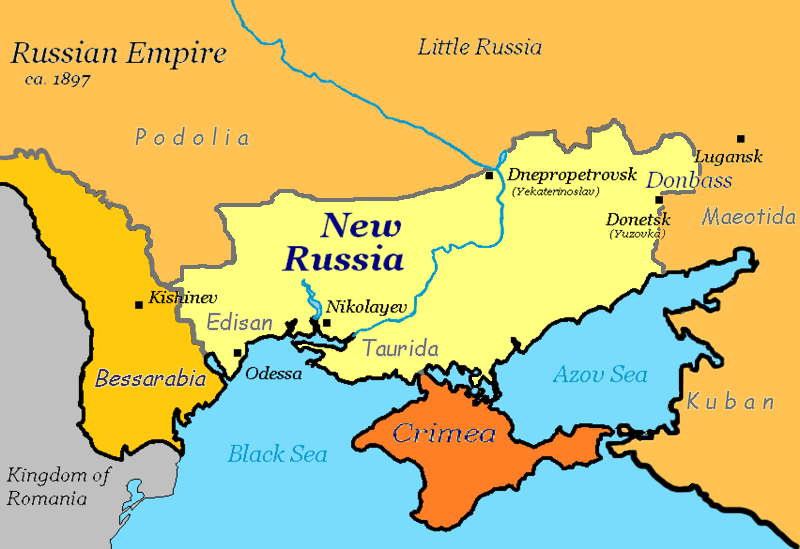
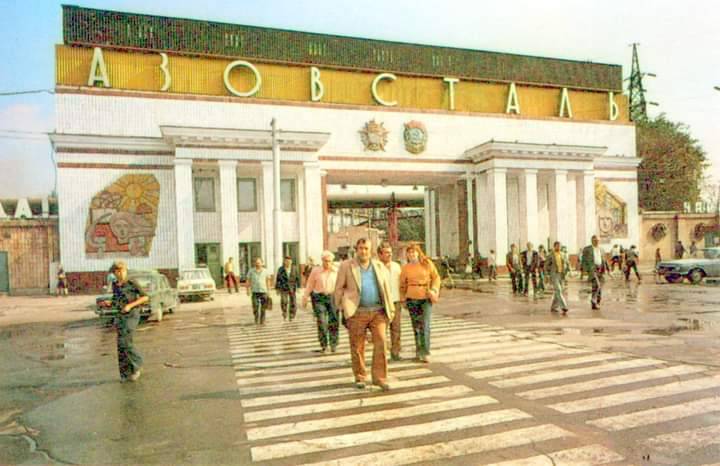
The Donetsk basin had been settled by Russian and Bessarabian people in the 18th Century, after the steppes of Ukraine and the coasts of the Black and Azov Seas were added to the Russian Empire. Donbass held enormous reserves of coal, which was vital to the industrialization of the Empire and, later, the Soviet Union. During Soviet times Donbass became the industrial center of the Ukrainian Soviet Socialist Republic, with major iron mines in Krivoy Rog, the massive steelworks “Azovstal,” and the manufacture of machine parts for the defense and space industries.
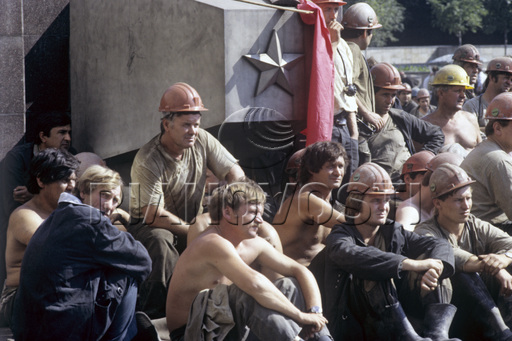
Coal miners were able to exert political power throughout the industrial age by staging widespread strikes. Major strikes in August and September 1962 were held in Donbass and neighboring regions, resulting in promises of extra pay and threats of military force from the authorities. Another wave of Donbass strikes in 1989 received concessions from the central government and the strike committees were effectively left in control of mining towns instead of the Communist Party. The tension between the central government and the Donbass miners was fueled by the increasing difficulty (and cost) of pulling coal from Donbass mines. Other coal-mining regions of the USSR were less costly but the social unrest in Donbass was placated with increasing state subsidies.
Ukrainian independence ended the Donbass’ struggle against Moscow but created intractable economic problems. The extensive subsidies for Donbass mines were shifted to the much less wealthy government in Kiev, the economic integration of the Soviet Union’s republics was disrupted, and the shift to a market economy was disastrous. After the breakup of the Union the political leaders of the Donbass miners would become known as “red directors,” socialists who put the interconnected economic needs of the Donbass and surrounding regions at the heart of their demands to Kiev.
One of the earliest separatist organizations in Ukraine was the International Movement of Donbass. The Ukrainian news site DEPO, citing Novosti Donbass, describes the origin of the Intermovement as a project of academics at Donetsk University. The group was created as the “International Front for Donbass” at a meeting held August 31, 1989.
The “Interfront” was clearly inspired by the Intermovement of Estonia, which had formed the year before to defend communism and the Union state from Estonian separatists. In the summer of 1990 two of the leading figures of the Interfront, the brothers Dmitry and Vladimir Kornilov, travelled to the Baltics and western Ukraine. On this trip they studied the Intermovement of Estonia and its parallel organizations in Lithuania and Latvia, as well as the anti-soviet People’s Movement of Ukraine based in Lviv.
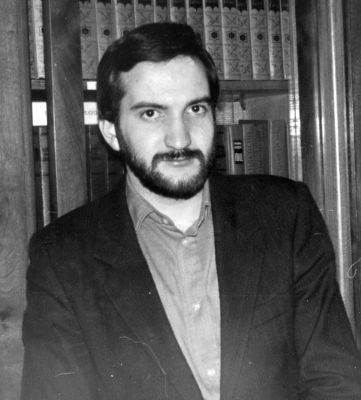
The founding conference of the Intermovement of Donbass was held on November 18, 1990 and the Kornilov brothers were among those elected to its central council. The Intermovement unsuccessfully promoted the New Union Treaty and gained little popular support. Their most enduring success debuted at a rally on October 18 1991, not long before the referendum on Ukraine’s declaration of independence: a red, blue, and black tricolor flag that would eventually become the flag of the Donetsk People’s Republic.
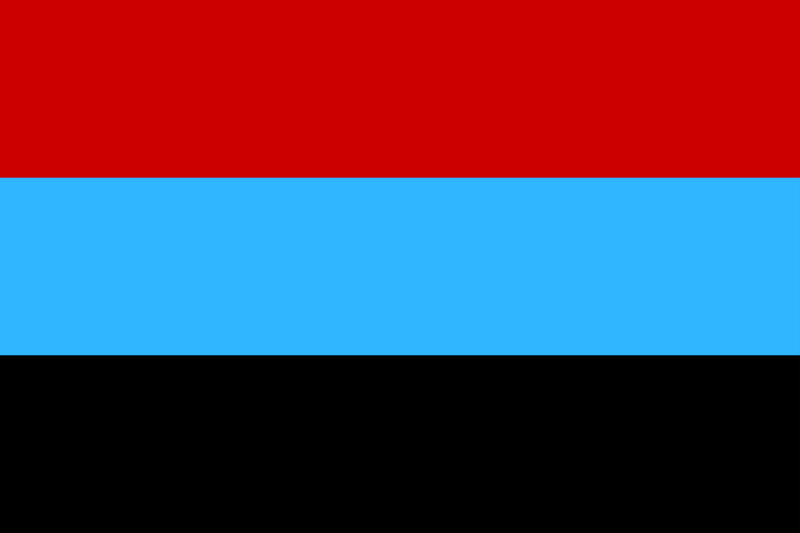
Again citing Novosti Donbass, DEPO reports that former KGB General Oleg Kalugin had accused all of the Intermovements of being created by the KGB. According to Kalugin the Intermovements were meant to undermine nationalist separatism in the republics of the Soviet Union.
One might question whether or not Kalugin is the most reliable source on this subject. He had been demoted for criticising KGB chief Yuri Andropov during Andropov’s anticorruption campaign, and also allegedly protected CIA spies in the USSR. Kalugin was elected to the Congress of People’s Deputies on the Democratic Platform of the CPSU in 1990 and supported the anticommunist reformer Boris Yeltsin. After securing the breakup of the KGB Kalugin moved to the United States in 1995. From the 1980s onward Kalugin had been an opponent of the socialist system and a supporter of those who would destroy it.
Whatever the truth is behind Kalugin’s statements, it is evident that an enthusiastic clique of academics, even with KGB backing, could not create a separatist movement out of thin air. The proof is in the results of the December 1, 1991 referendum in which 92% of voters said “YES” to the Declaration of Independence from the USSR.
The Intermovement for Donbass failed to raise support for a renewed USSR, but the separatist movement would grow larger and stronger with every crisis that shook independent Ukraine.
The Shock Year
The act of independence immediately triggered a years-long economic crisis which was the driving force behind Ukraine’s growing separatist and anti-government movements.
The March 1990 elections to the Congress of People’s Deputies and Supreme Soviet of Ukraine had been the first to allow non-communist candidates to participate. Liberals, nationalists, and other anticommunist groups like Rukh entered the legislature. During the reaction to the August Coup in 1991 the Communist Party of Ukraine was banned and the nationalist groups remained as the most organized factions in the legislature. As Ukrainian news site STRANA opined in their retrospective on 30 years of independence:
The nerve of 1992 is the first attempt by the country’s leadership to deviate from the framework set by 1991. When Ukraine arose as a result of a compromise between very different groups (including representatives of the party apparatus, directors of enterprises), most of [them], as well as the population as a whole (which was shown by voting for Kravchuk, and not for Chornovil [leader of Rukh]), were not nationalistic and did not want to completely break with Russia.
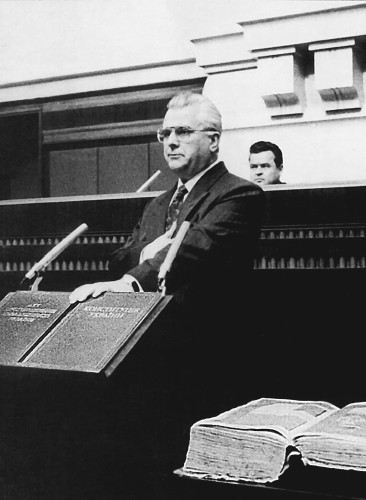
The newly independent government rapidly implemented policies which served nationalist and anticommunist ideologies irrespective of the material impact they had on the people of Ukraine. Per STRANA, “the nationalist tilt and the growing tension in relations with Russia became a serious factor in internal destabilization”.
1992 was immediately characterized by economic “shock therapy.” On 2 January 1992 all price controls were released, and the market was allowed to dictate prices on all consumer goods. The stated goal of this policy was to find balance between the shortage of goods and the large amount of money that the public held with nothing to buy. The “solution” to the “problem” of the public having too much money was predictable: the shelves were full of goods once more but prices increased by 2100% by the end of the year.
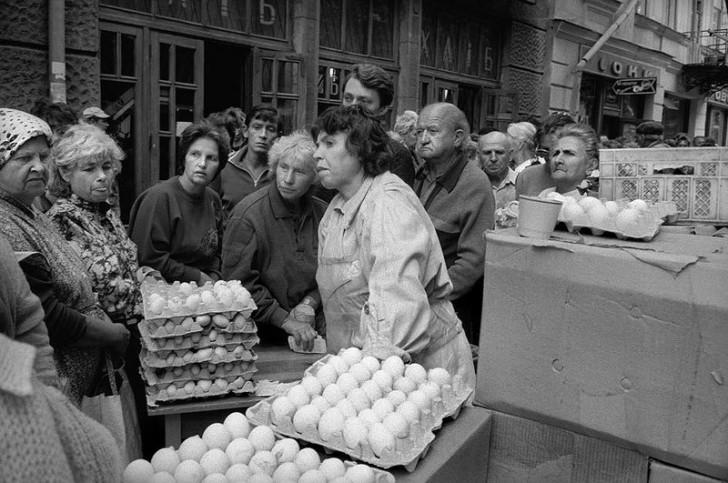
Inflation was accelerated by the spike in oil and gas prices as Ukraine lost the preferential rates it had enjoyed in the Soviet Union. Despite warnings from Moscow and the National Bank of Ukraine that the country would have to pay world prices if it exited the “Ruble Zone,” the government decided to drop the ruble by year-end.
New national borders interrupted the industrial sector, costs soared, demand fell (especially in state-driven industries like defense and science), and production crashed. For the first time in living memory Ukrainians experienced the terrors of unemployment, price gouging, and starvation in a time of plenty.
In a year, we all became impoverished millionaires
The monetary crisis was an indirect result of the USSR’s final Five Year Plan, developed under the principle of “acceleration.” Starting in 1990 the Union Republics were forced to issue “Consumer Cards” alongside wages to help ration basic goods like bread and sugar. The cards were perforated sheets of tear-off tokens which were printed in color and valid only if stamped by the employer or issuing agency. These were commonly referred to as “coupons” in Ukraine, (as in English this comes from the French word couper, “to cut”). The difficulty in counterfeiting was limited to the availability of color photocopiers, which became increasingly accessible after the borders were opened to western trade.

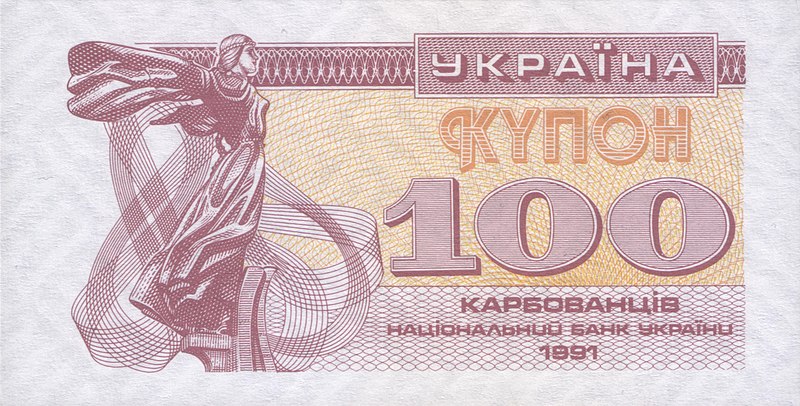
From-UA tells us the origin of the “coupon-karbovanets,” Ukraine’s first national currency. Independent Ukraine still used the ruble as its official currency in 1992, but rubles were printed by Goznak in Moscow. Unable to print more rubles to accommodate soaring prices and (slightly) increased wages, the Kiev government had to issue its own currency which was of much lower quality and was much easier to counterfeit than the ruble.
Introduced January 10 1992, the karbovanets was printed on simple paper with few protections. It was meant to supplement the ruble and replace coupons, not to act as a primary currency. The ease of counterfeiting was made worse by the ease of modification: a 1 karbovanets note was the same color as a 100 karbovantsi note. The kupon-karbovanets (notes were marked “купон,” literally “coupon”) became the most counterfeited currency in the world and hyperinflation accelerated further. By the end of 1992 the karbovanets was so worthless that it wasn’t profitable to counterfeit anymore.

Counterfeiters and “shuttle traders” who exploited shortages of money and goods made enormous illicit profits. Criminal enterprises flourished and became increasingly appealing to an impoverished public and dissolute youth, such as the “Runners.” These were gangs of ultraviolent teenagers who terrorized the streets of southern cities, using grenades and handmade pistols in their feuds.
Ukraine dropped the ruble on November 12, 1992 and had no stable legal currency to use at markets. Wages were worthless and some workers were paid directly in consumer goods instead of money. The economic problems of the working masses had become many times worse than they had been at the end of the Soviet era.
Demands of Donbass
Naturally there were outbursts of popular rage against the government as people lost their livelihoods. PhD student Vadim Borisov was with the miners in Donetsk when the 1993 general strike began.
Borisov described the inciting incident at Zasyadka coal mine on June 7:
The spark that ignited the flame was the increase in prices, carried out in the Donetsk region without advance warning on June 7. Half-smoked sausage, the daily food of miners, almost quadrupled in price overnight to 20,000 rubles (£4), compared to an average miner’s monthly salary of 120,000.
Many miners found out about the price increase when their wives returned in the morning from the shops, where they were going to buy food for their men on the “brake”
…
The last straw was the director’s innocent attempt to justify the state’s price policy — here the workers immediately agreed with the words of one of their comrades: “Work yourself!
As the workers marched to the Kirov District Council, a local journalist informed the City Strike Committee of the spontaneous action. The Strike Committee in turn contacted all of the mines in the region and work stopped in mines and other industries across Donetsk, Luhansk, and Dnipropetrovsk.
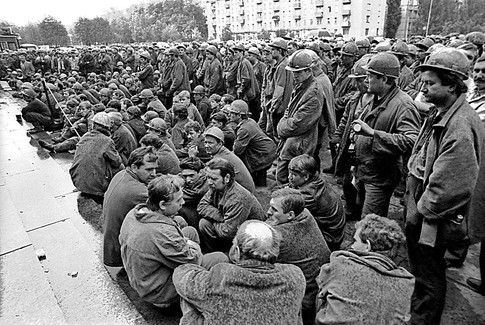
A government commission headed by the Finance Minister (who had authored the disastrous economic reforms) arrived in Donetsk on June 8. The striking miners made their demands clear: a no-confidence referendum on the President and parliament, and stronger regional self-government for Donbass. On June 18 the government agreed to schedule the referendum for September and to double miners’ wages. However this wage increase did little in the face of hyperinflation and the referendum was eventually cancelled in favor of early elections.
Regional autonomy had already been a project of the Donetsk Regional Council before the 1993 general strike. Chairman Vadim Chuprun, elected November 12 1992, had been carefully negotiating agreements with the president regarding Donetsk Oblast’s right to determine some of its own economic policies. In a February 1993 interview with Dmitry Kornilov’s newspaper Chuprun explicitly proposed the federalization of Ukraine. Then on June 8, when the miners demanded autonomy and a confidence vote, Chuprun called a meeting of the Donetsk Council to demand broad autonomy for Donetsk, Luhansk, Dnipropetrovsk, and Zaporizhzhia.
Even after the general strike had ended, President Kravchuk acceded to some of these demands and on November 26 1993 his Decree no. 560/93 gave those four regions control over 400 state owned enterprises. When the parliament blocked this decree and only 200 enterprises passed to regional control the Donetsk Council responded by refusing to remit taxes to Kiev, keeping them to fund their own budget.
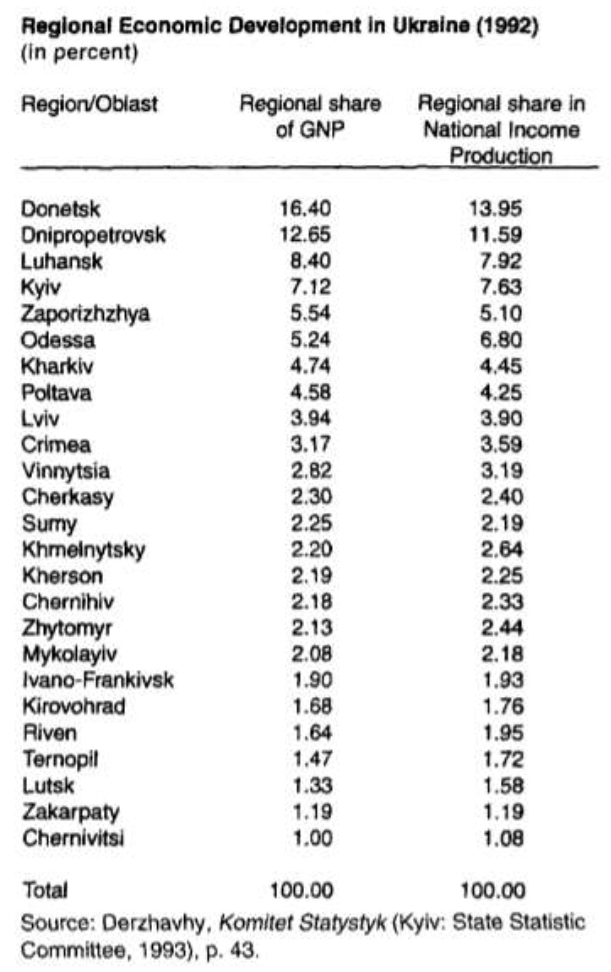
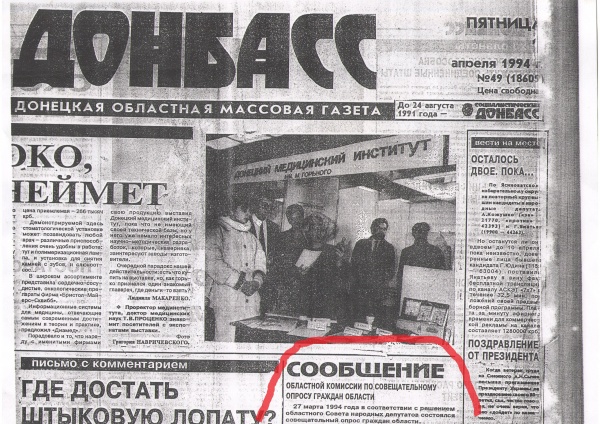
The federalist movement reached its maturity the next year. A “consultative poll” was held in Donetsk and Luhansk oblasts on the same day as the early elections, March 27 1994. The central government refused to acknowledge it as a legally binding referendum, but the poll results showed that Donbass had a popular mandate to establish an autonomous government.
The poll had four questions: whether the constitution of Ukraine change from a unitary state to a federal state, whether the Russian language should be constitutionally equal to the Ukrainian language, whether Russian should be an equal language of government and education in Donbass, and whether Ukraine should be a full participant in the post-Soviet Commonwealth of Independent States.
An overwhelming majority of voters said “YES” to all four questions: the federal system received 84% of all valid ballots in Donetsk, and the other three questions received more than 90% of all valid ballots in both regions.

Writing from Donetsk during the ’93 strike, Borisov noted that the national news media was hostile towards the Donbass movements. Though this strike was the largest in Ukrainian history it received much less coverage than those during the Soviet era, directed against the Communist Party. The advocates of autonomy and federalism were portrayed as separatists or even as Russian nationalists. Were these movements really motivated by nationalist ideology?
Only a few years earlier the great majority in Donbass had voted to separate from Russia. It was the years of struggle and starvation which followed that pushed people, not to join Russia, but to take control of their lives within Ukraine. By ignoring the real struggles of the people, misrepresenting their wishes, and blocking reasonable solutions, nationalists forced them to take increasingly drastic actions to protect their basic interests. This conflict has continued to intensify, wave by wave, up to the present day.
[ Featured image: “Rally in Donetsk on Lenin Square” for the 1994 federalization referendum. From Nakanune via Ukraina.ru. ]

 Liminal States